

Virtual Reality in Healthcare: Innovations and Case Studies
Author
Gerald Ferreira
Date Published
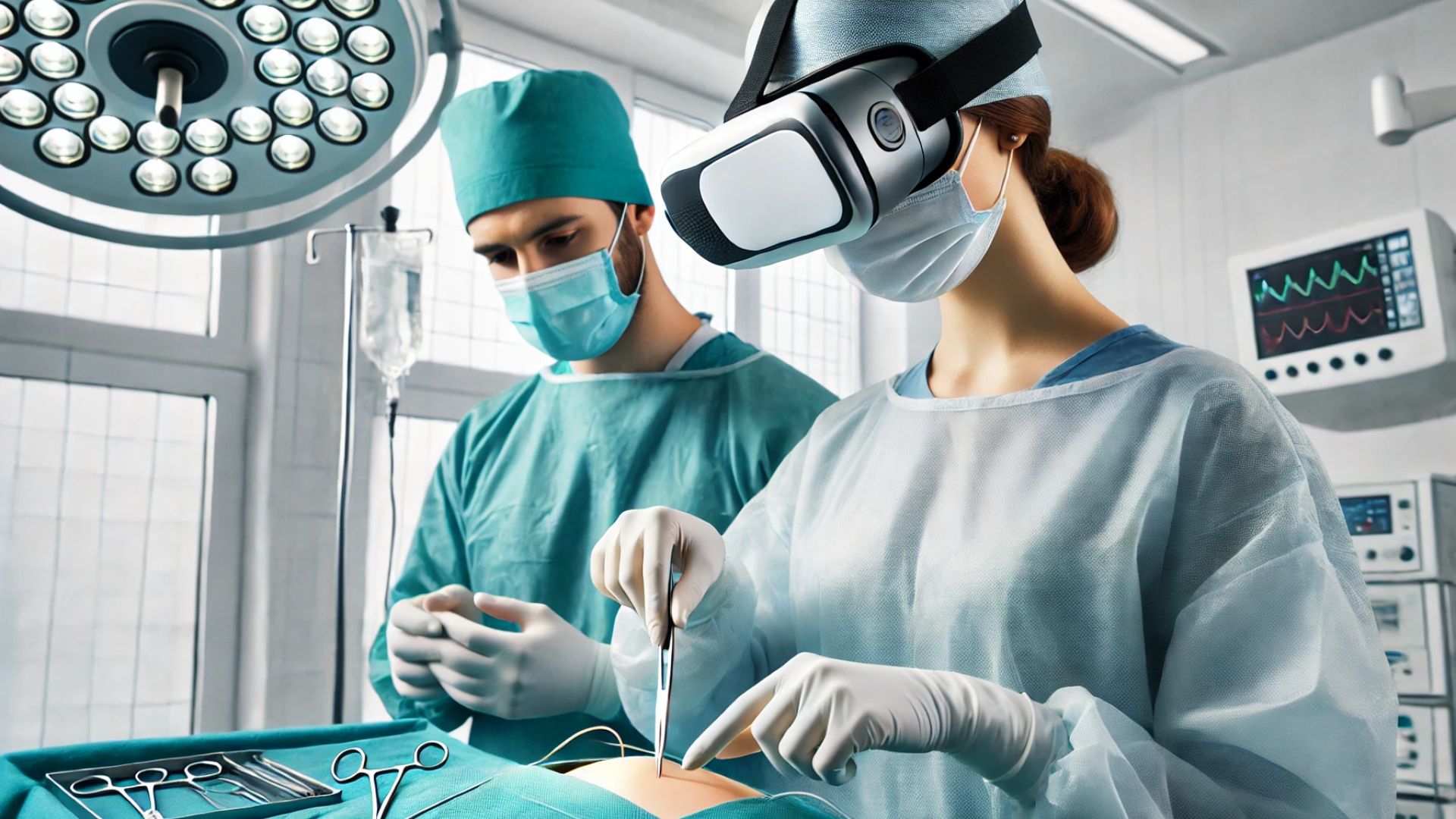
The integration of Virtual Reality (VR) into the healthcare sector has revolutionized patient care, medical training, and therapeutic practices. As technology advances, VR is becoming an indispensable tool in enhancing medical outcomes and transforming the landscape of healthcare delivery. This exploration delves into the groundbreaking innovations and real-world case studies that highlight the profound impact of VR in healthcare.
Transforming Patient Care: The New Frontier of Virtual Reality
In the realm of healthcare, Virtual Reality serves as a catalyst for innovation, bridging the gap between traditional medical practices and cutting-edge technology. By immersing patients and practitioners in simulated environments, VR facilitates a more interactive and effective approach to treatment, training, and patient engagement. This transformation is not merely incremental but represents a paradigm shift in how healthcare services are delivered and experienced.
Diagnostic and Surgical Precision: Enhancing Accuracy with VR
Advanced Imaging and Visualization: Seeing Beyond the Surface
Virtual Reality offers unprecedented capabilities in medical imaging and visualization, allowing healthcare professionals to examine the human body with extraordinary detail. Through VR-enabled 3D models, surgeons can explore anatomical structures from multiple angles, enhancing their understanding of complex cases. This immersive visualization aids in planning intricate surgeries, reducing the risk of errors, and improving patient outcomes.
For instance, in neurosurgery, VR allows surgeons to navigate the intricate pathways of the brain with precision. By overlaying patient-specific data onto a virtual model, surgeons can practice and refine their techniques before performing the actual procedure. This level of preparation not only increases surgical accuracy but also shortens operation times, leading to faster patient recovery and reduced hospital stays.
Surgical Training and Simulation: Mastering the Art of Surgery
The traditional methods of surgical training, while effective, are limited by the availability of real-life cases and the inherent risks involved in practicing on live patients. Virtual Reality bridges this gap by providing a safe and controlled environment for aspiring surgeons to hone their skills. VR simulations replicate a wide range of surgical scenarios, from routine procedures to complex, high-stakes operations.
Medical students and residents can engage in repetitive practice without the fear of making mistakes that could jeopardize patient safety. These simulations offer real-time feedback and performance analytics, enabling trainees to identify areas for improvement and achieve a higher level of proficiency. As a result, VR-based training programs are accelerating the learning curve and producing more competent and confident surgeons.
Enhanced Diagnostic Tools: Revolutionizing Medical Assessments
Virtual Reality is also transforming diagnostic processes by providing tools that enhance the accuracy and efficiency of medical assessments. VR-enabled devices can integrate with existing diagnostic equipment, offering a more immersive and interactive way to interpret data. For example, radiologists can use VR to navigate through complex imaging data, such as MRI and CT scans, gaining a deeper understanding of a patient's condition.
This enhanced diagnostic capability allows for earlier detection of diseases, more precise staging of cancers, and better-informed treatment planning. By leveraging VR, healthcare providers can deliver more personalized and effective care, ultimately improving patient prognosis and quality of life.

Therapeutic Interventions: Healing Through Immersive Experiences
Pain Management and Rehabilitation: Alleviating Discomfort with VR
Virtual Reality is proving to be a powerful tool in pain management and physical rehabilitation, offering non-pharmacological alternatives that enhance patient comfort and recovery. Through immersive VR experiences, patients can distract themselves from chronic pain, reducing their reliance on pain medications and minimizing side effects.
In rehabilitation, VR provides interactive and engaging exercises that motivate patients to adhere to their therapy regimens. For example, stroke patients can participate in virtual games that encourage limb movement and coordination, making the rehabilitation process more enjoyable and effective. These tailored VR programs adapt to each patient's progress, ensuring that therapy remains challenging yet achievable, thereby accelerating recovery.
Mental Health and Therapy: Navigating the Mind with VR
The application of Virtual Reality in mental health therapy is opening new avenues for treating conditions such as anxiety, PTSD, and phobias. VR environments can simulate triggering situations in a controlled and gradual manner, allowing patients to confront and overcome their fears with the guidance of a therapist.
Cognitive Behavioral Therapy (CBT) is being enhanced with VR by providing immersive scenarios that facilitate cognitive restructuring and behavioral change. For instance, individuals with social anxiety can practice social interactions in a virtual setting, building their confidence and reducing their anxiety in real-world situations. This innovative approach not only improves therapeutic outcomes but also expands access to mental health services by providing scalable and adaptable treatment options.
Cognitive Rehabilitation: Rebuilding the Brain with VR
Virtual Reality is also making strides in cognitive rehabilitation, assisting patients in recovering cognitive functions lost due to brain injuries, strokes, or neurodegenerative diseases. VR-based cognitive exercises are designed to stimulate brain activity and promote neuroplasticity, the brain's ability to reorganize itself by forming new neural connections.
Patients engage in tasks that challenge their memory, attention, and problem-solving skills within immersive virtual environments. These exercises are not only more engaging than traditional methods but also provide real-time feedback and progress tracking, enabling therapists to tailor interventions to each patient's specific needs. By leveraging VR, cognitive rehabilitation becomes more effective, helping patients regain independence and improve their overall quality of life.

Medical Training and Education: Revolutionizing Learning with VR
Interactive Learning Modules: Engaging the Next Generation of Healthcare Professionals
Virtual Reality is transforming medical education by providing interactive and immersive learning modules that enhance the educational experience. Traditional classroom-based learning is complemented by VR simulations that allow students to engage with complex medical concepts in a hands-on manner. For example, anatomy students can explore the human body in a 3D virtual environment, gaining a more comprehensive understanding of spatial relationships and physiological functions.
These interactive learning tools foster deeper engagement and retention of knowledge, preparing students for real-world medical challenges. By integrating VR into the curriculum, educational institutions can offer a more dynamic and effective learning experience, ultimately producing better-prepared healthcare professionals.
Continuing Education and Skill Development: Lifelong Learning with VR
Medical professionals are required to engage in continuous education to stay abreast of the latest advancements and best practices. Virtual Reality offers a flexible and efficient platform for ongoing training and skill development, allowing healthcare providers to access updated training modules at their convenience.
VR-based continuing education programs can simulate rare or complex medical cases, providing professionals with opportunities to practice and refine their skills without the constraints of traditional training environments. This approach not only enhances proficiency but also ensures that healthcare providers are well-equipped to handle a wide range of clinical scenarios, thereby improving patient care and outcomes.
Collaborative Training and Remote Learning: Bridging Distances with VR
In an increasingly globalized world, collaborative training and remote learning are essential for medical education. Virtual Reality facilitates these initiatives by creating shared virtual spaces where students and professionals from different locations can interact and learn together.
Through VR, participants can engage in joint simulations, share insights, and collaborate on solving medical cases in real-time. This technology bridges geographical gaps, fostering a more inclusive and interconnected medical community. By enabling seamless collaboration, VR enhances the educational experience and promotes the exchange of knowledge and expertise across borders.

Real-World Applications: Case Studies Demonstrating VR's Impact
Case Study 1: VR-Assisted Surgery at the Mayo Clinic
The Mayo Clinic has been at the forefront of integrating Virtual Reality into surgical practices. By utilizing VR for preoperative planning and intraoperative guidance, surgeons can achieve greater precision and efficiency during complex procedures. In one notable case, VR-assisted surgery enabled a team of surgeons to perform a delicate brain surgery with enhanced visualization of critical structures, resulting in a successful outcome and reduced recovery time for the patient.
This case highlights the tangible benefits of VR in improving surgical accuracy, minimizing risks, and enhancing patient care. The Mayo Clinic's pioneering efforts demonstrate how VR can be seamlessly incorporated into clinical workflows, setting a benchmark for other medical institutions to follow.
Case Study 2: VR for PTSD Treatment at the VA San Diego Healthcare System
The Veterans Affairs (VA) San Diego Healthcare System has implemented Virtual Reality as part of its treatment program for veterans suffering from Post-Traumatic Stress Disorder (PTSD). By exposing patients to controlled virtual environments that replicate traumatic scenarios, therapists can guide patients through exposure therapy in a safe and controlled setting.
This innovative approach has shown significant improvements in reducing PTSD symptoms, providing veterans with effective coping mechanisms and enhancing their overall mental health. The VA's use of VR in mental health treatment underscores the versatility of VR technology in addressing a wide range of healthcare challenges.
Case Study 3: VR-Based Physical Therapy at Stanford Health Care
Stanford Health Care has adopted Virtual Reality for its physical therapy programs, offering patients an engaging and interactive way to perform rehabilitation exercises. Patients recovering from orthopedic surgeries or injuries can participate in VR-guided exercises that are both fun and effective, promoting adherence to therapy regimens and accelerating recovery.
In one instance, a patient undergoing knee rehabilitation experienced a marked improvement in mobility and strength through VR-based therapy, reporting a more enjoyable and motivating rehabilitation process compared to traditional methods. Stanford's implementation of VR in physical therapy showcases how technology can enhance patient engagement and improve clinical outcomes.

Future Prospects: The Evolving Role of VR in Healthcare
Integration with Artificial Intelligence: Smart VR Solutions
The convergence of Virtual Reality and Artificial Intelligence (AI) holds immense potential for the future of healthcare. AI-powered VR solutions can provide personalized and adaptive experiences, tailoring simulations and interventions to the specific needs of each patient. For example, AI algorithms can analyze a patient's performance in VR-based therapy and adjust the difficulty level in real-time, ensuring optimal engagement and progress.
This integration enhances the effectiveness of VR applications, making them more responsive and tailored to individual patient requirements. As AI continues to advance, the synergy between VR and AI is expected to drive further innovations in healthcare, offering smarter and more efficient solutions for patient care and medical training.
Expansion into Telemedicine: Enhancing Remote Care with VR
Virtual Reality is poised to play a significant role in the expansion of telemedicine, offering immersive and interactive ways to deliver remote healthcare services. VR-enabled telemedicine platforms can facilitate virtual consultations, allowing healthcare providers to interact with patients in a more engaging and realistic manner. Patients can undergo virtual examinations, receive real-time feedback, and participate in remote therapy sessions, all within a virtual environment.
This advancement not only improves the accessibility and convenience of healthcare services but also enhances the quality of care by providing more interactive and personalized patient-provider interactions. The integration of VR into telemedicine represents a significant step towards more comprehensive and patient-centered remote healthcare solutions.
Ethical Considerations and Accessibility: Ensuring Equitable VR Healthcare
As Virtual Reality becomes more entrenched in healthcare, addressing ethical considerations and ensuring accessibility are paramount. It is essential to ensure that VR technologies are accessible to diverse populations, including those with disabilities and those from underserved communities. Additionally, ethical guidelines must be established to protect patient privacy and data security within VR applications.
Efforts to democratize VR healthcare involve developing affordable and user-friendly solutions, providing training for healthcare professionals, and fostering inclusive designs that cater to a wide range of user needs. By addressing these challenges, the healthcare sector can ensure that the benefits of VR are equitably distributed and that the technology is used responsibly and ethically.

Frequently Asked Questions
How is Virtual Reality improving surgical outcomes?
Virtual Reality enhances surgical outcomes by providing surgeons with advanced visualization tools, allowing for precise preoperative planning and real-time intraoperative guidance. This leads to increased accuracy, reduced operation times, and minimized risks, ultimately improving patient recovery and overall surgical success.
Can VR be used for mental health treatments?
Yes, Virtual Reality is effectively used in mental health treatments such as exposure therapy for PTSD, anxiety disorders, and phobias. By creating controlled virtual environments, therapists can guide patients through therapeutic exercises, helping them confront and manage their mental health challenges in a safe and supportive setting.
What are the benefits of VR in medical training?
VR offers immersive and interactive training modules that enhance the learning experience for medical students and professionals. It allows for realistic simulations of medical procedures, enabling hands-on practice without the risks associated with real-life training. This leads to better skill acquisition, increased confidence, and improved preparedness for actual clinical scenarios.
Is Virtual Reality accessible to all patients?
While Virtual Reality has the potential to benefit a wide range of patients, accessibility can vary based on factors such as cost, availability of technology, and individual patient needs. Efforts are being made to develop more affordable and user-friendly VR solutions to ensure that the benefits of VR healthcare are accessible to diverse populations.
What are the future trends for VR in healthcare?
Future trends for Virtual Reality in healthcare include integration with Artificial Intelligence for personalized experiences, expansion into telemedicine for remote care, and advancements in haptic feedback for more realistic interactions. Additionally, ongoing developments aim to improve accessibility and address ethical considerations, ensuring that VR continues to evolve as a vital tool in healthcare.